Commerce awards Colville Confederated Tribes funds for electric boat
Published 12:00 pm Thursday, March 12, 2026
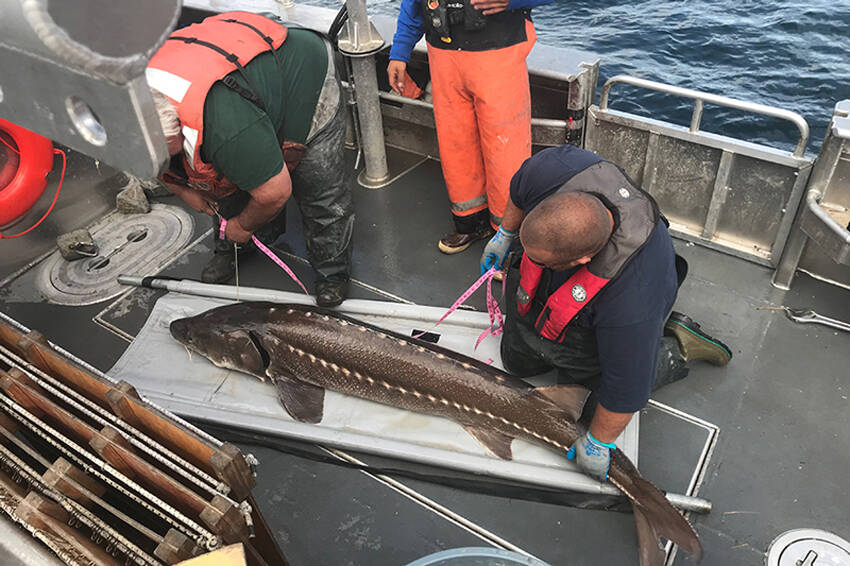
OLYMPIA – The Washington State Department of Commerce has awarded the Confederated Tribes of the Colville Reservation $1,137,000 for a new all-electric passenger and work boat.
The award was part of $16.8 million in clean energy grants to support 22 projects in 17 tribal communities across Washington. The awards will also fund feasibility studies for three tribes to evaluate the solar potential, technical requirements, and financial viability of solar and battery energy storage systems.
The projects are part of the state’s effort to invest in tribal energy sovereignty, a key component of Washington’s 2021 State Energy Strategy and climate laws, including the Climate Commitment Act and the Healthy Environment for All (HEAL) Act.
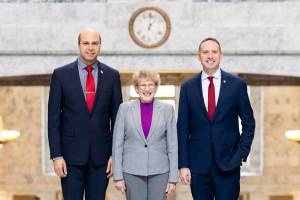
“Under their sovereign authority, tribal nations are shaping their own energy future,” said Commerce Interim Director Sarah Clifthorne. “These investments support projects that tribes have identified as priorities, strengthening community facilities, lowering energy costs and building long-term resilience.”
The awards, totaling $16,810,568, come from four programs funded by the CCA:
- The Clean Energy Siting and Permitting Program provides $584,872 to tribal communities, part of $4,850,000 available statewide, to support faster, more efficient and more equitable siting and permitting processes for clean energy projects in Washington.
- The Tribal Clean Energy Grants Program provides $11,475,696 to support tribally determined clean energy priorities and advance tribal energy sovereignty for federally recognized tribes with lands in Washington. While $5 million was initially set aside for tribes through the Clean Energy Fund, Commerce increased its commitment to $9 million and ultimately awarded more than $11.4 million to meet strong demand and advance tribal-led projects.
- The Tribal Electric Boats Program provides $4,750,000 to support the electrification of tribal fishing vessels, including research and patrol boats, and to fund marine charging equipment needed to power them.
- The Technical Assistance Program provides direct assistance to communities, including tribes, that are exploring energy system solutions to strengthen resilience.
For tribal leaders, these investments represent more than infrastructure funding. They reflect long-term commitments to cultural preservation, economic resilience and energy independence.
“The Swinomish Indian Tribal Community is pleased to expand our partnership with the Department of Commerce to begin electrifying our tribal fishing fleet,” said Swinomish Tribal Chairman Steve Edwards. “Swinomish are People of the Salmon, and utilizing clean technology aligns with our practice to consider the next seven generations in all of our actions. The Tribe is grateful to continue on our renewable energy pathway with the state.”
The funding supports meaningful environmental work, in addition to honoring tribal sovereignty and ensuring tribes can prepare for the future.
Of the projects, eight will complete construction, four will advance planning and design, and three will conduct feasibility studies through Commerce’s Tribal Clean Energy Grant and Technical Assistance programs. Commerce selected Cascadia Renewables as the Technical Assistance Program provider through a competitive process. The firm will work closely with participating tribes to deliver tailored, community-driven feasibility studies and predevelopment support.
Together, these investments accelerate clean energy deployment in tribal nations and communities, strengthening resilience facilities, reducing long-term energy costs, and laying the groundwork for economic opportunity and emissions reductions across Washington.
Awards list
Clean Energy Siting and Permitting awards
- Nooksack Indian Tribe (Deming): $185,000 for solar siting and permitting planning to support future renewable energy development on tribal lands.
- Yakama Power (Yakama Reservation): $399,872 for Advanced Rail Energy Storage Project and transmission siting and pre-development surveys to advance renewable energy development within the Yakama Nation.
Tribal Clean Energy Grants
- Nooksack Indian Tribe (Everson): $1,055,544 for a 95 kW DC solar array and a 125 kW capacity battery energy system at the Sulwhanon Community Building.
- Hoh Indian Tribe (Forks): $715,897 for the Hoh Highlands Energy Resilience Project to install a 174 kW DC solar array as part of the microgrid at the new Resiliency and Administration Center.
- Indian Land Tenure Foundation (Neah Bay): $200,000 for the National Indian Carbon Coalition Makah Tribe Climate Adaptation Plan Project to cover the creation of the Makah Tribe Climate Action Plan.
- Nisqually Indian Tribe (Olympia): $200,000 for the Nisqually Biochar Feasibility Project, which covers the feasibility study and planning for a pilot biochar production project within the Nisqually Community Forest.
- Jamestown S’Klallam Tribe (Sequim): $1,365,692 for the Dungeness River Nature Center Microgrid Resilience Project, to install a 129.6 kW DC solar array with a 125 kW battery energy storage system that will support Jamestown S’Klallam Tribe’s long-term energy sovereignty.
- Squaxin Island Tribe (Shelton): $923,434 for Skookum Creek Solar Project, which is a 344.08 kW rooftop solar system projected to generate 319,221 kWh annually.
- Suquamish Tribe (Suquamish): $2,169,750 for a Solar + Storage Resiliency Project to install a 118.9 kW DC solar array with a 96 kW battery energy system.
- Shoalwater Bay Indian Tribe (Tokeland): $162,018 for the Community Garden Off-Grid Resilience Solar and Water Security System, to install a 6.6 kW solar array and two battery backups totaling 78.15 kWh.
- The Tulalip Tribes (Tulalip): $200,000 for Tulalip Community Resilience Hub Phase 2 Design and Permitting to support the final designs and contracting for the Tulalip Gathering Hall Resiliency Hub microgrid.
- Yakama Nation Housing Authority (Wapato): $1,802,145 for the Pahto Village Solar Project to install 270 kW DC of solar capacity with a mix of rooftop and carport installations at the Pahto Village housing site on the Yakama Nation Reservation.
- Yakama Power (Yakama Reservation): $2,481,848 to install approximately 1.46 megawatts (MW) of direct current (DC) solar generation on the Yakama Reservation as part of Yakama Nation’s larger solar-over-canal projects.
- Yakama Power (Yakama Reservation): $199,368 to support feasibility studies and initial planning for two Yakama Nation clean energy projects, including a solar and storage project and a clean energy industrial park.
Tribal Electric Boats Program awards
- Samish Indian Nation (Anacortes): $886,361 for a fully electric 26-foot landing craft that will provide patrol and dive support functionality in the Salish Sea.
- Lummi Nation (Bellingham): $1,187,000 to repower a commercial fishing vessel to a hybrid diesel-electric motor system and add a new EV charger at Lummi Reservation.
- Quinault Indian Nation (Grays Harbor): $352,639 for a fully electric 24-foot workboat for fisheries research and monitoring in Grays Harbor, Lake Quinault, and the Olympic Coast of the Pacific Ocean.
- Confederated Tribes of the Colville Reservation (Omak): $1,137,000 for a new all-electric passenger and work boat for multiple uses including salmon harvest, cultural site visits, youth education, research and monitoring, and council- and community-led tours that connect tribal members to lands inaccessible by road.
- Swinomish Indian Tribal Community (Swinomish Port): $1,187,000 to repower a commercial fishing vessel with two inboard diesel engines and two diesel generators for a hybrid diesel-electric motor system.
Technical Assistance awards
- Nooksack Indian Tribe (Deming): The Nooksack Battery Energy Storage System (BESS) Feasibility Technical Assistance study will evaluate battery energy storage systems at four critical facilities to support resilience and continuity of essential services during power outages.
- Coeur d’Alene Tribe (Plummer, Idaho, with aboriginal lands in Washington): The Rockford Casino Solar Array Feasibility Study will evaluate a 5 MW solar PV array with battery storage to offset a high-demand resort and casino operation.
- Snoqualmie Indian Tribe (Snoqualmie): A feasibility study will evaluate rooftop and ground-mounted solar PV with battery storage, including load requirements, solar potential, and technical and financial viability.